CHIP · Community Health & Integrated Programs

Thematic Areas

Programmatic Framework & Service Portfolio

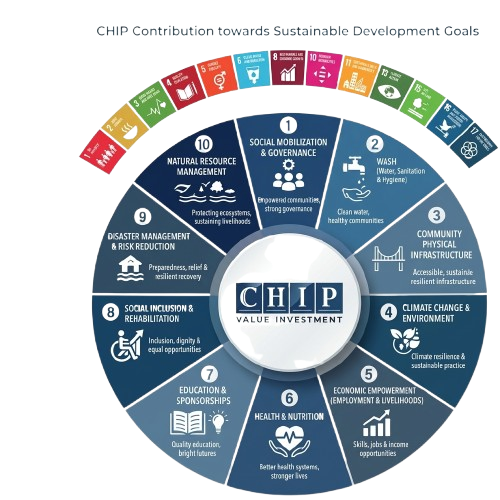
CHIP drives inclusive, community-centered development by turning expertise into real impact across health, education, livelihoods, WASH, disability inclusion, climate action, and humanitarian response — anchored by cross-cutting commitments to gender equality, disability inclusion, community empowerment, and the humanitarian-development nexus.

  • Engage local leaders, women, and youth in participatory planning and decision-making processes.
  • Support community-led monitoring and advocacy mechanisms to improve public service delivery and accountability.
  • Strengthen community-based organizations (CBOs) and village committees to ensure long-term self-reliance and sustainability.
  • Promote transparency, social audits, and accountability in local development projects.
  • Build the capacity of elected local bodies and citizen groups to foster inclusive and participatory governance.
  • Install water filtration plants in rural and peri-urban communities to ensure access to safe drinking water.
  • Construct girls-friendly and disability-accessible toilet facilities in schools and community settings.
  • Promote menstrual hygiene management (MHM) through structured awareness campaigns and distribution of sanitary products.
  • Train sanitation workers on safe hygiene practices and provide appropriate personal protective equipment.
  • Conduct hygiene promotion campaigns in schools and communities to instill sustainable behavioral change.
  • Support the development of sewerage systems and safe wastewater management infrastructure.
  • Implement inclusive village development models that mainstream gender equality and disability considerations.
  • Develop accessible community infrastructure — including ramps, pathways, and handrails — for persons with disabilities.
  • Construct or rehabilitate rural roads, drainage systems, and market pathways to enhance connectivity and mobility.
  • Build inclusive community centers, libraries, and accessible public spaces that serve all community members.
  • Ensure universal design principles are applied consistently across all infrastructure development projects.
  • Drive community-led adaptation initiatives for climate-resilient agriculture and sustainable livelihoods.
  • Run awareness campaigns on sustainable environmental practices, including tree planting and waste management.
  • Promote climate-smart organic farming techniques such as drought-resistant crop cultivation and water conservation.
  • Establish community-level early warning systems to mitigate the impact of extreme weather events.
  • Support the adoption of renewable energy solutions — including solar panels and clean cookstoves — in rural areas.
  • Rehabilitate degraded lands and promote reforestation using native and ecologically appropriate species.
  • Provide targeted skills training for youth with disabilities through the Futuremaker's "Ready for Inclusive Sustainable Employment and Entrepreneurship for Youth with Disabilities" (RISEE).
  • Offer vocational training programs for women and marginalized youth, covering tailoring, information technology, handicrafts, and agriculture.
  • Facilitate access to microfinance services, savings groups, and small business development grants.
  • Support market linkages and job placement services to connect vulnerable populations with sustainable employment opportunities.
  • Promote entrepreneurship through structured mentorship programs and business development training.
  • Establish community-owned enterprises, including farming cooperatives and community production units.
  • Boost childhood immunization coverage through community engagement, in partnership with the Gavi Vaccine Alliance.
  • Lead the Pakistan CSOs Coalition on Health & Immunization (PCCHI), uniting 42 community-based organizations around a shared health advocacy agenda.
  • Improve maternal and child health outcomes through antenatal care, safe delivery support, and postnatal services.
  • Address adolescent reproductive health through peer education programs and youth-friendly service delivery.
  • Implement nutrition programs targeting stunting, wasting, and micronutrient deficiencies among vulnerable populations.
  • Strengthen community health systems by training Lady Health Workers (LHWs) and community health volunteers.
  • Organize health camps and mobile clinics to extend healthcare access to underserved and remote areas.
  • Award scholarships for female students, including through a formal partnership with Fatima Jinnah University.
  • Run community-based learning programs for out-of-school children in underserved districts.
  • Support Parent-Teacher Associations (PTAs) to improve school governance, retention, and community engagement.
  • Provide catch-up education and accelerated learning pathways for over-age learners.
  • Distribute school supplies, uniforms, and shoes to marginalized children to reduce attendance barriers.
  • Establish early childhood education (ECE) centers in rural communities to lay foundations for lifelong learning.
  • Promote adult literacy and numeracy classes, with a particular focus on women and marginalized groups.
  • Provide assistive devices — including wheelchairs, hearing aids, corrective glasses, and eye surgeries — alongside rehabilitation services for persons with disabilities.
  • Ensure schools, workplaces, and public buildings are fully accessible and inclusive for persons with disabilities (PWDs).
  • Support income-generating projects and social protection mechanisms for marginalized and vulnerable families.
  • Prevent gender-based violence (GBV) through awareness programs, the establishment of safe spaces, and functioning referral mechanisms.
  • Promote inclusive community capacity building to strengthen participation in local governance.
  • Mainstream disability and social inclusion considerations across all CHIP programs and operational frameworks.
  • Organize sports, cultural, and advocacy events to reduce stigma, promote dignity, and foster social cohesion.
  • Distribute food and non-food items (NFIs) to affected populations during emergency response operations.
  • Build disaster-resilient shelters, prioritizing women-headed households and the most vulnerable.
  • Provide medical services, mobile health units, and psychosocial support in disaster-affected communities.
  • Delivered COVID-19 relief — including hygiene kits and rehabilitation support.
  • Establish community-based disaster risk reduction (CBDRR) committees and functional early warning systems.
  • Conduct disaster preparedness drills and training sessions for vulnerable communities.
  • Support post-disaster livelihood restoration through cash-for-work programs and targeted assistance.
  • Conserve water, forests, and fisheries to sustain critical ecosystems and enhance community resilience.
  • Promote beekeeping, cattle rearing, and backyard poultry as income-generating and nutrition-improving activities.
  • Introduce sustainable fishing practices and aquaculture systems in ecologically suitable areas.
  • Implement watershed management and rainwater harvesting systems to address water scarcity.
  • Support community forestry and agroforestry initiatives to restore degraded landscapes and diversify livelihoods.
  • Train farmers on sustainable land use, soil conservation, and organic farming techniques.
  • Establish community-led natural resource governance committees to ensure equitable and sustainable resource management.
Embedded Across Every Program

Cross-Cutting Commitments

Gender Equality

All programs prioritize women's full participation, leadership, and equitable access to resources and decision-making.

Disability Inclusion

Universal design, provision of assistive devices, and targeted programmatic support for persons with disabilities are integrated across all sectors.

Community Empowerment

Every initiative is designed to build local capacity, promote community ownership, and ensure long-term sustainability beyond project cycles.

Humanitarian–Development Nexus

CHIP systematically links emergency humanitarian relief with longer-term recovery, resilience-building, and sustainable development outcomes.

RISEE Logo